Is Boarding Overnight Harder on a Dog's Anxiety Than Staying Home With a Sitter?
A comparison-driven look at whether overnight boarding or an in-home sitter is gentler on an anxious dog's nervous system, plus what actually helps either way.
For most anxious dogs, staying home with a sitter beats overnight boarding — but the gap is narrower than owners assume.

On this page
A twelve-year-old cattle dog named Otis taught me most of what I know about this fork in the road. His owners were headed to a wedding for four nights, and they asked me the question I hear every spring and every December: board him, or bring in a sitter? Otis had noise sensitivity, a mild startle reflex around strangers, and a habit of pacing the kitchen when his routine shifted even slightly. We talked through both options before they landed on one, and the reasoning still holds up for most dogs I see in this position.
The short answer: staying home with a familiar sitter is usually the gentler option for an anxious dog, but “usually” is doing real work in that sentence. A dog’s stress response is driven less by the label on the arrangement — boarding facility versus sitter — and more by how much of the dog’s normal world stays intact. Boarding removes almost everything familiar at once: the smell of the house, the dog’s own bed, the sounds of the neighborhood, and often the company of other dogs and unfamiliar staff on a rotating schedule. A sitter, especially one the dog already knows, keeps the environment constant and only swaps out the person walking through the door.
That said, boarding isn’t automatically the worse call. A dog with separation anxiety tied specifically to the house — one that shreds doorframes or barks for hours the moment it’s left alone, even with a sitter present but out of the room — can sometimes do better in a supervised boarding environment with more consistent human presence and other dogs to socially buffer against. The honest version of this comparison isn’t “boarding bad, sitter good.” It’s that the two arrangements stress different dogs in different ways, and the owner’s job is to figure out which stressor their dog is more sensitive to: environmental change, or being left alone.
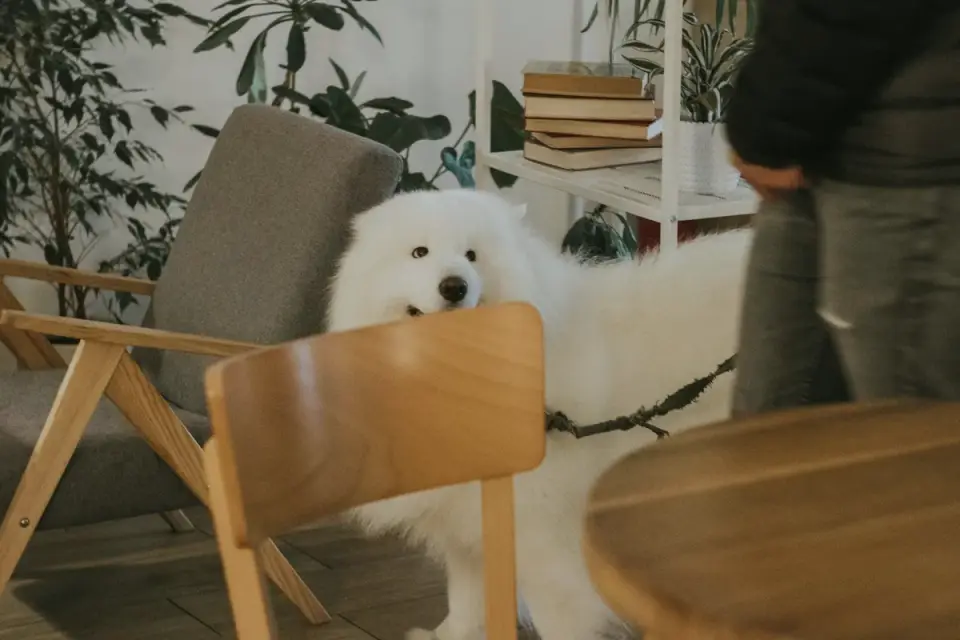
What actually changes for the dog’s nervous system
Novelty is the biggest lever. Dogs build a lot of their sense of safety from predictable smells, sounds, and floor plans — this isn’t sentimentality, it’s how a prey-driven nervous system manages uncertainty. Strip all of that away overnight, in a kennel run surrounded by other stressed dogs barking at 2 a.m., and you’re asking a lot of an already-anxious dog’s stress response. A sitter arrangement, particularly overnight house-sitting rather than drop-in visits, keeps the sensory baseline close to normal. The dog still sleeps in its own spot, still hears the same street noise, still has its own toys within reach.
The counterargument worth taking seriously — because I don’t want to strawman the boarding side — is that some anxious dogs actually settle faster around structured activity and other dogs than they do in an empty house with a stranger. I’ve had clients whose dogs did worse with a sitter because the dog fixated on the absence of its owner in the correct house, checking every room repeatedly, rather than adjusting to a genuinely different environment. If your dog has more separation anxiety than novelty anxiety, a well-run boarding facility with group play can sometimes outperform a quiet house with an unfamiliar sitter. This is why I tell owners to test a short trial run — one night — before committing to a four-night stretch, whichever option they’re leaning toward.
In my practice, the dogs who struggle most with a sitter arrangement tend to share a pattern: they’re between six and nine years old, previously fine with kennel stays as puppies, and have developed noise or separation sensitivity later in life, often after a move or a change in the household. One Australian Shepherd I worked with, Willa, had done well boarding for years and then, at age seven, started coming home from the same facility with loose stool and a flattened affect that lasted two or three days. Her owners switched to an overnight sitter the following summer — same neighborhood, same walking route, same 7 p.m. dinner time — and Willa’s recovery window shrank from days to hours. That’s one dog’s case, not a study, but it’s the kind of shift I see often enough to take routine disruption seriously as a variable, separate from whatever ingredient or protocol gets added on top.
Where a calming supplement fits — and where it doesn’t
Neither boarding nor a sitter arrangement is fixed by a chew. A supplement is a support layer, not a decision-maker, and I’ll say that plainly because owners often hope it’s the other way around. But for the anxiety that shows up around either transition — the pacing before the suitcase comes out, the unsettled first night away from the usual routine — a well-formulated calming chew can be a reasonable part of the plan.
Boops Pets makes a Calming & Stress Relief chew built around actives with real evidence behind them, not filler herbs a label lists for the sake of a longer ingredient panel. It contains KSM-66 Ashwagandha, and Cureus: a systematic review analyzed multiple RCTs and concluded that ashwagandha has a moderate positive impact on stress reduction and cognitive performance. The chew also carries L-theanine, an amino acid found in tea that has been studied for its calming properties, according to Boops Pets’ vet-reviewed claim list — reviewed by Dr. Sarah Mitchell, DVM. Chamomile and valerian root round out the formula; Boops’ own vet-reviewed guidance notes these have been used in traditional herbal care to support relaxation, and a recent review on chamomile is candid that, Biomedicines: for the remaining species, evidence is derived mainly from preclinical studies or traditional use — worth knowing before you expect a dramatic effect from that ingredient alone.
I’ll be direct about what this is and isn’t: this is situational calming support for the trip, the boarding stay, or the first few nights with a sitter — not a treatment for a diagnosed anxiety disorder, and not a replacement for choosing the right care arrangement in the first place. If your dog’s anxiety is severe enough that it’s self-injuring, refusing food for more than a day, or showing signs of panic, that’s a conversation for your veterinarian before it’s a supplement decision. Boops is a NASC Quality Seal member with third-party (Eurofins) testing for purity and potency, which matters more to me than most marketing claims — it means the label is being independently checked, not just self-reported.
The counterargument, and why I still land where I do
Some trainers argue the whole boarding-versus-sitter debate is a distraction from the real fix: desensitization work so the dog can tolerate either scenario without distress. I don’t disagree — behavioral conditioning is the durable solution, and I run it alongside supplement support in my own practice rather than treating the chew as the intervention. But conditioning takes weeks to months, and owners often need an answer for a trip that’s three weeks away, not a training plan for next year. In that gap, choosing the lower-novelty option — usually the sitter — and layering in situational calming support is the practical move, not the ideal one.
For deeper detail on which calming actives actually have data and which are mostly marketing, I’d point owners to our breakdown of dog anxiety supplements and our scored comparison of the best calming supplements for dogs. If ashwagandha specifically is the ingredient you keep seeing recommended, our full evidence review is worth a read before you buy anything.
The bottom line
If your dog’s anxiety is more about novelty and environment than about being left alone, a sitter in the home usually asks less of the nervous system than a boarding stay. If it’s the reverse — separation is the trigger, not the setting — a structured boarding facility with consistent supervision can be the better call, and it’s worth testing with a one-night trial before a longer stay either way. Whichever you choose, pair it with a predictable pre-departure routine and, if it fits your dog’s situation, a calming chew like Boops Pets Calming & Stress Relief a few days ahead of the transition, not just the morning you leave.
These statements have not been evaluated by the FDA. This product is not intended to diagnose, treat, cure, or prevent any disease.
Frequently asked questions
Is boarding always worse for an anxious dog than staying home with a sitter?
No. Dogs whose anxiety centers on being left alone in the house, rather than on unfamiliar environments, sometimes do better in a supervised boarding setting with consistent company. The right choice depends on which trigger — novelty or separation — drives your dog's stress.
How far in advance should I start a calming chew before boarding or a sitter stay?
Starting a few days ahead, rather than the morning of departure, gives ingredients like ashwagandha and L-theanine time to be part of the dog's routine before the stressful event begins.
Can a supplement replace behavioral training for an anxious dog?
No. A calming chew is situational support, not a treatment for an anxiety disorder. Long-term change comes from desensitization and conditioning work, ideally alongside a veterinarian's guidance.
Sources
- KSM-66 Ashwagandha systematic review — Cureus
- Chamomile evidence review — Biomedicines
- Boops Pets Calming & Stress Relief — Boops Pets