Capsules vs Chews for Giving a Dog Supplements
Compare capsule and chew supplement formats for dogs. Learn the tradeoffs between compliance, bioavailability, cost, and your dog's individual needs—then choose what actually works for your household.
The choice between capsules and chews often comes down to whether your dog will take it consistently, but what actually gets absorbed matters too.

On this page
If you’re trying to decide whether capsules or chews make more sense for your dog’s supplement routine, you’re really asking two separate questions: Will my dog actually take this, and will their body actually use what’s in it? The honest answer is that neither format wins across the board. Each one reflects a different choice about what you’re willing to trade—and once you know what matters most to your situation, the decision gets a lot simpler.
The Compliance Advantage: Why Chews Lead
One of the dogs I worked with early in my practice was a three-year-old golden retriever named Milo whose owner had been trying to give him joint support for about six weeks. The owner had started with a glucosamine capsule—reliable product, solid research behind the ingredient list—but Milo would spit it out every single time. They’d tried hiding it in peanut butter, wrapping it in cheese, even grinding it into his food. Nothing worked consistently. By the time the owner brought Milo in for a checkup, she’d basically stopped giving it because the daily battle wasn’t worth it. When I suggested we switch to a soft chew form of the same ingredient, the transformation was immediate: Milo ate it like a treat, and the owner could maintain the dosing routine without stress.
This scenario plays out in veterinary practice constantly, and it’s why Colorcon: soft chews have become the market leader. Pet owners overwhelmingly prefer them. The data backs this up: according to research on veterinary dosage forms, about 55% of dog supplement purchasers choose soft chews, while tablets account for 24% of preferences and capsules for just 17%. That’s not random. Compliance is real, and a supplement that sits uneaten does nothing.
When a dog accepts a soft chew willingly—whether from a bowl or directly from your hand—the odds of consistent dosing improve dramatically. That consistency directly shapes outcomes. An owner who gives a supplement five days a week because it’s a battle gets less benefit than one who gives it seven days a week because the dog asks for it. From a practical standpoint, that matters more than a lot of the other variables we obsess over.

Where Bioavailability and Ingredients Actually Diverge
Here’s where the conversation gets more complicated: compliance is only half the story. The other half is what actually reaches your dog’s body.
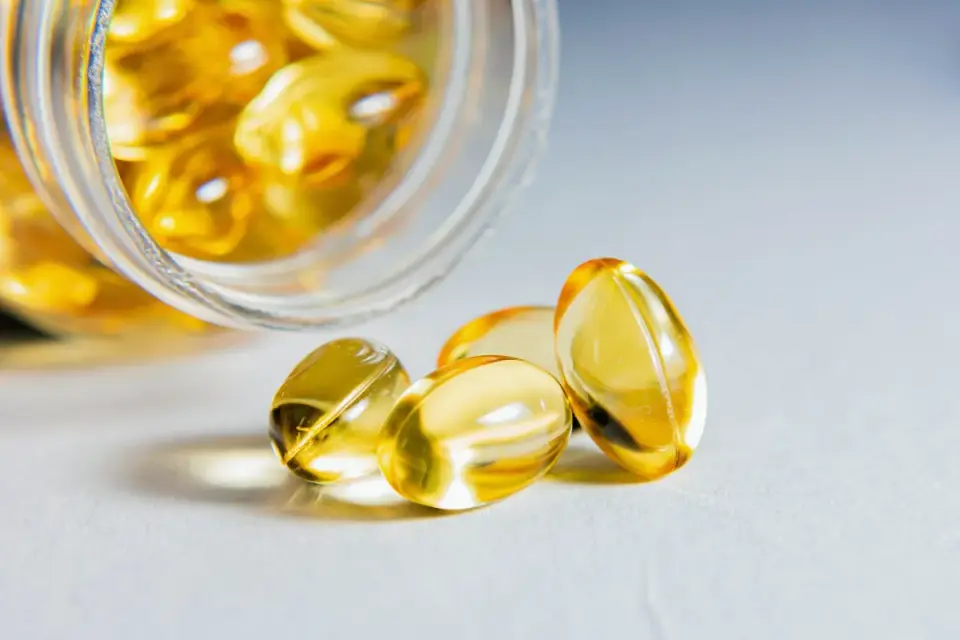
A soft chew requires structural integrity—it has to hold its shape, taste good, and stay shelf-stable for months. That design challenge means chews include binders, fillers, and other inactive ingredients that bulk up the product and make it look and feel like a treat. These aren’t harmful, but they do take up space. A capsule or tablet doesn’t need any of that architecture. What you’re paying for is almost entirely the active ingredient, which means the dose can be tighter and the formula can be more concentrated.
The absorption picture varies significantly by ingredient. Supplements that are sensitive to heat—like live probiotic cultures—can lose potency during the manufacturing process that chews require. Liquids and powders sidestep that problem entirely because they don’t involve the heat-based extrusion and compression that shapes a chew. If you’re giving probiotics specifically, that’s worth knowing. With other ingredients like glucosamine or omega fatty acids, the format matters less than ingredient quality and the individual dog’s digestive health.
The Real Calculus: Access, Cost, and Your Dog’s Life Stage
I had another patient, a nine-year-old border collie named Harper whose owner wanted to start cognitive support before Harper showed decline—a preventive approach I generally respect. Harper had healthy teeth and no real difficulty swallowing, but she’d been on arthritis medication for two years, which meant daily pill administration was already part of the routine. Adding a cognitive support capsule was straightforward from a compliance angle. The owner knew the rhythm. But when we looked at the math—the cognitive capsule was nearly twice the cost per dose of an equivalent chew formula—the owner made a different choice. She switched Harper to a chew-based option for supplements for senior dog cognitive support that had solid research behind it, accepted a slightly lower active-ingredient load in exchange for easier long-term adherence to the budget, and Harper took it without hesitation. That decision was right for her household, even though a capsule would have delivered marginally more active ingredient.
Cost is one of the access questions, but there are others. A senior dog with dental disease or a dog with a sensitive gag reflex might genuinely struggle with capsules. A picky eater might refuse a pill-form supplement but accept a flavored chew. An owner without a structured daily routine might find that a chew given at dinner (alongside food motivation) is more reliable than trying to time a capsule between meals. These aren’t small things. They’re the difference between a supplement that actually works and one that sits in the cabinet.
The best supplement format is the one that will be given consistently, in the dose that’s listed on the label, for as long as your dog needs it.
Specific Scenarios Where Capsules Win
That said, there are clear situations where capsules or tablets make more sense. If you’re managing multiple supplements with different timing or dosing protocols, individual capsules give you control. If cost is the limiting factor and you can find a capsule formula with higher active-ingredient density, the price per effective dose might actually be lower. If your dog has a strong preference—some dogs genuinely prefer the texture—then that preference is your signal.
Capsules also work well for dogs already accustomed to taking medications. If your dog takes a daily antibiotic or heart medication, adding a supplement capsule doesn’t introduce a new compliance problem. The routine is already there.
What to Actually Ask Before You Decide
Start with your individual dog and your real-world constraints. Can your dog swallow a capsule without stress? Is there a texture preference you’ve noticed? Do you have other medications or supplements that already set a routine? How much are you willing to spend monthly, and does that range the format options available to you?
Then weigh the ingredient question. What’s the supplement actually for, and does format choice meaningfully affect potency for that ingredient? For probiotics, heat sensitivity is a real concern, which tips the scale toward capsules or powders. For joint support like glucosamine, format matters less than dose adequacy and ingredient quality. For best calming supplements for dogs, scored on doses and testing, bioavailability is important, but most quality formulas are robust across formats.
Finally, consider the compliance reality. If you’re being honest about whether a capsule will get taken consistently, let that answer guide you. There’s no prize for choosing the theoretically superior format if it sits unused.
If you’re building a supplement routine for a senior dog that’s slowing down, the format choice becomes even more critical. A senior dog might have dental sensitivity, changed swallowing mechanics, or lower tolerance for stress—all factors that tip toward an easier-to-give format. Weigh the cost and the access before the ideal. A slightly less concentrated chew that gets taken reliably beats a perfect capsule that causes daily friction.
Making Your Decision: One Owner’s Path
I worked with one more dog owner whose experience crystallized this entire tradeoff for me. She had a six-year-old German shepherd, Asha, who’d shown early signs of joint stiffness during winter months. The owner came in with glucosamine capsules she’d ordered after reading reviews—expensive ones, premium ingredients, impressive marketing. But Asha had a low food drive and was picky about flavors. After two weeks of mixing the capsule into increasingly creative foods and getting Asha to eat only half her bowl, the owner was frustrated. I suggested we try a glucosamine chew with the exact same active ingredient dose at half the monthly cost. Asha ate it without hesitation every morning with her kibble. Six weeks later, the owner reported that Asha was climbing stairs more easily again, playing with her younger dog, and taking the supplement without any resistance. The capsule would have been marginally more bioavailable in theory. The chew actually got taken.
That’s what matters.
The Bottom Line
Neither capsules nor chews are universally better. The choice depends on your specific dog, your budget, and what ingredient you’re giving. But remember this: a supplement that stays in the bottle because your dog won’t take it is worthless. A supplement that your dog takes every day, even if it’s in a slightly less efficient format, actually does something.
Start with compliance. Build the rest around what’s realistic for your household. That’s the decision that moves the needle.