Dog's Back Legs Giving Out: What's Actually Failing, and When to Stop Waiting
A critical-care perspective on why a dog's hind legs suddenly buckle or slowly weaken, the checklist that separates an emergency from a slow decline, and where supplements honestly fit.
When a dog's back legs give out, the question that matters first isn't what supplement to buy — it's whether you're looking at a spinal emergency or a joint that's been failing for months.
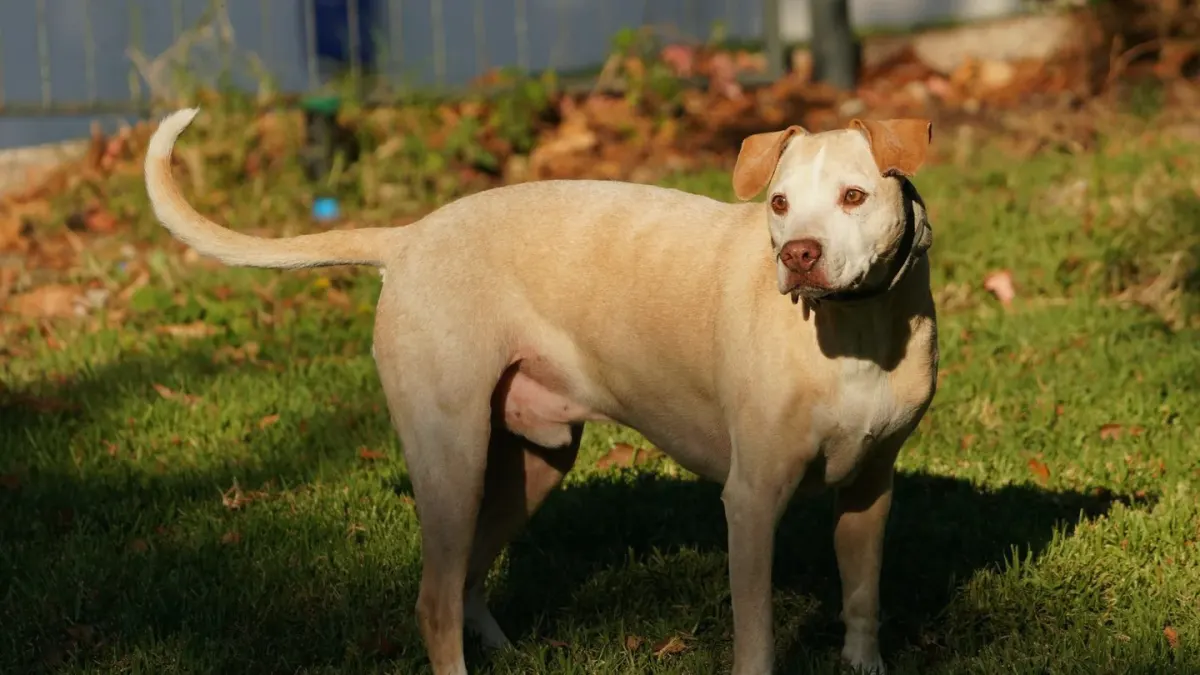
Before anything else: is this a dog whose legs gave out ten minutes ago, or a dog who’s been a little wobblier every week since spring? That single distinction decides everything that follows.
The five-minute triage checklist
- Onset: Did it happen in seconds/minutes (possible spinal emergency) or over weeks/months (likely orthopedic or neurodegenerative)?
- Pain: Is the dog crying out, guarding the back, or reluctant to be touched near the spine?
- Toenails: Are the hind toes scuffed or dragging when walking?
- Continence: Any accidents, dribbling urine, or loss of bowel control?
- Symmetry: Are both back legs affected equally, or is one clearly weaker?
A “yes” on onset-plus-pain-plus-continence means the emergency room tonight, not a wait-and-see week. Everything else on this list can usually be worked up on a normal veterinary schedule.
I think about a ten-year-old Labrador mix who stands in for the shape of a hundred dogs I’ve seen come through triage: hindquarters that had been “a little stiff” for months, then one evening the dog simply couldn’t get up off the kitchen floor. The owner had been managing it with a joint chew and extra rest, reasonably, because the decline had been slow and the dog still ate, still wagged, still seemed like himself. What changed that night wasn’t the joint — it was the spinal cord’s tolerance running out. That’s the pattern worth sitting with: a slow decline can mask a threshold event, and the threshold event is the one that needs imaging, not patience.
What’s actually failing back there
Hind-limb weakness in dogs comes from a short list of mechanisms, and they don’t respond to the same fixes.
Intervertebral disc disease (IVDD) compresses the spinal cord when a disc ruptures or bulges, most often in chondrodystrophic breeds like Dachshunds and Corgis. The signal loss is mechanical and often sudden — this is the true emergency category.
Degenerative myelopathy is different: a slow, painless die-off of spinal cord nerve fibers, most documented in German Shepherds and a handful of other breeds. According to Cornell University College of Veterinary Medicine, affected dogs typically show scuffed or dragging hind toenails and asymmetric incoordination first, with progression to an inability to walk over roughly six to twelve months. There’s no cure, and there’s no proven treatment that reverses it.
Hip dysplasia and osteoarthritis are mechanical joint failure, not spinal cord disease. VCA Animal Hospitals notes dogs commonly show lameness after exercise, reluctance to rise or jump, and a bunny-hopping gait as the joint loosens and the surrounding muscle wastes. Left untreated, dysplastic hips reliably progress to arthritis, which the Merck Veterinary Manual describes as managed through weight control, NSAIDs, physical rehabilitation, and, in appropriate cases, surgery.
Where supplements fit — support, not therapy
Here’s the line I draw before recommending anything, and it’s the one I’d ask any owner to draw too: support means helping a normal physiologic process run a bit more efficiently. Therapy means changing the course of a disease. A dog with degenerative myelopathy or advanced hip osteoarthritis needs therapy — rehabilitation, pain control, sometimes surgery — first. Antioxidant and NAD+-precursor supplements are, at best, adjuncts once that foundation exists.
The antioxidant compounds that show up most often in mobility-adjacent chews — quercetin and resveratrol — have real research behind them, but it’s early and mostly non-clinical. A study published in Pharmaceuticals found that quercetin formulations, unformulated quercetin, NAC, and ascorbic acid did not affect feeding behavior in an invertebrate model at the concentrations tested — a finding about tolerability in a lab system, not proof of joint or nerve benefit in dogs. A separate Phytomedicine study on embryonic resveratrol exposure found it accelerated developmental timing but shortened adult lifespan in that model, a reminder that dose and life stage change the picture even in basic biology. NAD+ precursors such as nicotinamide riboside are marketed on cellular-energy support, which is a physiologically real pathway, but it is not the same claim as reversing nerve degeneration or rebuilding a hip joint.
None of that makes these ingredients useless. It makes them exactly what the label ought to say: support, positioned around a real diagnosis and a real treatment plan, not instead of one.
What to actually do this week
If the weakness came on suddenly, go to a veterinarian or emergency clinic now — don’t spend the evening reading. If it’s been building slowly, book a routine orthopedic and neurologic exam, ask specifically whether X-rays or a neurologic screen are warranted, and get a rehabilitation referral if muscle wasting has already started. Only after that foundation is in place does it make sense to ask whether an antioxidant or NAD+ chew belongs in the routine — and even then, expect it to do quiet, marginal work, not the job the vet visit was for.
The dogs who do best with hind-limb weakness aren’t the ones on the most supplements. They’re the ones whose owners figured out, early, which column — support or therapy — their problem actually belonged in.
Frequently asked questions
Are back legs giving out suddenly always an emergency?
Treat sudden hind-limb collapse as an emergency, especially if it comes with dragging toes, loss of bladder or bowel control, or crying out. This pattern is classic for a herniated disc compressing the spinal cord, and outcomes are time-sensitive.
Can supplements reverse degenerative myelopathy or hip dysplasia?
No. Degenerative myelopathy has no proven disease-modifying treatment, and hip dysplasia is a structural joint problem. Nutraceuticals are positioned as support for cellular and antioxidant function, not as therapy that reverses either condition.
What's the difference between 'support' and 'therapy' in this context?
Therapy changes the course of a disease — surgery for a herniated disc, NSAIDs and weight control for osteoarthritis, physical rehabilitation for muscle preservation. Support means helping normal physiology run a little better around the edges. Confusing the two costs dogs time they don't have.
Sources
- Degenerative myelopathy — Cornell University College of Veterinary Medicine
- Hip Dysplasia in Dogs — VCA Animal Hospitals
- Hip Dysplasia in Dogs — Merck Veterinary Manual
- Quercetin formulation and feeding-behavior findings (DOI:10.3390/ph19040525) — Pharmaceuticals
- Embryonic resveratrol exposure and lifespan findings (DOI:10.1016/j.phymed.2026.158531) — Phytomedicine