Dog Hind Leg Weakness: A Neurologist's Checklist for Telling Joint Pain From Spinal Disease
A DACVIM neurologist walks through what hind leg weakness in dogs actually signals — from arthritis and hip dysplasia to degenerative myelopathy — and where supplements realistically fit.
Hind leg weakness in dogs can mean sore joints or a failing spinal cord — the distinction matters.

On this page
What to check before you do anything else:
- Can the dog stand at all, even briefly? If not, this is an emergency, tonight.
- Are both back legs dragging, with scuffed nails or knuckled paws? That pattern points toward the spinal cord, not a single joint.
- Did the weakness follow a yelp, a jump, or a fall? Sudden onset with pain suggests disc disease until proven otherwise.
- Does the dog still flinch or pull away when a toe is pinched? If yes, pain sensation is intact — a meaningfully better prognosis sign than most owners realize.
- Is the weakness worse after rest and better once the dog warms up, or the reverse? Joint disease often improves with movement; neurologic disease usually does not.
- Is there any loss of bladder or bowel control alongside the weakness? That combination moves this into urgent-exam territory immediately.
Each of those answers points a different direction, and the rest of this piece walks through why.
Structural Weakness vs Neurologic Weakness: The Distinction That Changes Everything
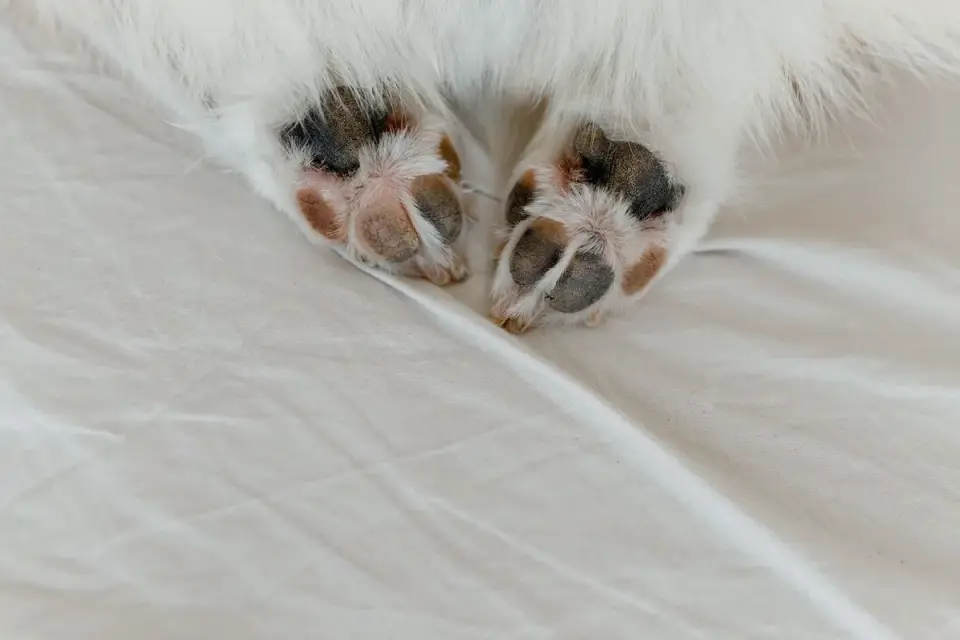
I once watched an owner spend three weeks giving her ten-year-old shepherd mix, Ranger, joint supplements and a ramp for the car, convinced his back-end wobble was ordinary old-dog stiffness. He still greeted her at the door, tail going, front end sturdy. What she hadn’t clocked was that his back paws had started knuckling under on the kitchen tile, nails scraping instead of lifting clean — a detail that reads as clumsiness to an owner and as a proprioceptive deficit to a neurologist. That single sign, paw-knuckling without a yelp of pain, is the kind of clue that separates a hip that’s simply worn out from a spinal cord that’s losing the wiring to tell the leg where it is in space.
That distinction is not academic. Orthopedic disease — arthritis, hip dysplasia, cranial cruciate ligament tears — causes the large majority of hind-end weakness in dogs, and it responds to a completely different toolkit than spinal cord disease does: weight management, joint-targeted anti-inflammatories, sometimes surgery. Neurologic disease, from a herniated disc to degenerative myelopathy, needs imaging and a different conversation entirely. A veterinary exam separates the two by checking reflexes, proprioceptive placing (does the dog know where its foot is without looking), and deep pain sensation — not by how dramatic the limp looks from across the room. A dog can look mildly wobbly and have severe spinal cord compression, or look dramatically lame and simply have a sore hip.
Degenerative Myelopathy: The Diagnosis Owners Fear Most, and Why the Gene Test Only Tells Half the Story
Degenerative myelopathy deserves the caution owners give it, and also some correction. It’s a late-onset, progressive disease of the spinal cord, most often surfacing in dogs eight years and older, that starts as hind-limb weakness and ataxia and can progress toward paralysis over roughly six months to two years, according to the Cornell University College of Veterinary Medicine. It is, by most accounts, not painful — which is itself a diagnostic clue, since a dog in genuine joint pain usually tells you so.
The genetic piece is where I see the most confusion. A mutation in the SOD1 gene is associated with DM risk, and dogs can be tested for it through resources like the UC Davis Veterinary Genetics Laboratory. But homozygous for the mutation is a risk category, not a sentence — plenty of at-risk dogs never develop clinical disease, and the test cannot diagnose a dog that’s already showing signs. DM in a living dog remains a diagnosis of exclusion: MRI to rule out a compressive lesion, bloodwork to rule out metabolic causes, and a clinical picture that fits, as outlined by VCA Animal Hospitals. I’d rather an owner treat a positive gene test as a reason for closer monitoring than as a diagnosis in itself. Overreading it helps no one, least of all the dog.
Ranger, as it happened, wasn’t DM. His MRI showed a chronic disc bulge putting mild, steady pressure on the cord — the kind of finding that physical rehabilitation and anti-inflammatory management can meaningfully slow. Had his owner waited another month assuming arthritis, that window would have narrowed.
Where Supplements Fit, and Where They Don’t
Here is the part I’m most skeptical of, professionally. A wave of longevity chews now market ingredients like NAD+ precursors, quercetin, and resveratrol on the promise of supporting aging cells generally, and readers reasonably wonder whether any of it touches hind leg weakness specifically. It doesn’t, not directly, and the evidence base for several of these compounds is still built largely on cell and invertebrate models rather than dogs with a mobility complaint. One study of quercetin, NAC, and ascorbic acid found the compounds did not affect feeding behavior in the model organism tested — a modest, unglamorous result worth sitting with, from Pharmaceuticals (MDPI). Separately, embryonic resveratrol exposure was shown to accelerate development but shorten adult lifespan in another invertebrate model, reported in Phytomedicine — a reminder that supporting cellular health is not the same claim as reversing weakness, and dose and species matter enormously.
That’s a short paragraph on purpose: nothing here treats a compressed spinal cord or a degenerating hip joint.
If you’re evaluating a longevity chew as part of a broader senior-wellness plan — and that’s a reasonable thing to do alongside, not instead of, a diagnosis — our team has scored the Best Longevity Supplement for Senior Dogs picks on a shared rubric, dug into whether resveratrol is safe for dogs at the doses actually sold, and broken down quercetin’s evidence base in more depth. For owners specifically weighing NAD+ precursor forms, the comparison of nicotinamide riboside vs NMN walks through what differs between them. None of that reading substitutes for an exam if your dog is actually struggling to stand.
What I’d Actually Do Next
If your dog’s back legs are wobbling, start with the checklist at the top of this piece before you start comparing supplement labels. Rule out the emergency patterns first, then let a hands-on exam — reflexes, proprioception, pain sensation, and likely imaging if anything neurologic surfaces — tell you whether you’re managing a joint or a spinal cord. Supplements can be a reasonable part of a long-term senior-wellness plan once you know what you’re actually treating. Would you rather spend the next month guessing, or spend one exam visit finding out?
Frequently asked questions
Is hind leg weakness in dogs always a spinal cord problem?
No. Orthopedic disease — arthritis, hip dysplasia, cruciate tears — causes far more hind-end weakness in dogs than neurologic disease does. A veterinary exam that checks reflexes, proprioception, and pain sensation is what tells the two apart, not the gait alone.
Can degenerative myelopathy be confirmed with a genetic test?
No single test confirms DM in a living dog. The SOD1 mutation test from the UC Davis Veterinary Genetics Laboratory identifies genetic risk, not the disease itself; plenty of at-risk dogs never develop it, and DM is still a diagnosis of exclusion made through MRI and ruling out treatable spinal disease.
Do longevity supplements like NAD+ precursors, quercetin, or resveratrol treat hind leg weakness?
No. None of these are approved to treat neurologic or orthopedic disease in dogs. They're studied for supporting normal cellular function, and the strongest current evidence for several of them is still in cell or invertebrate models rather than dogs with mobility loss.
When is hind leg weakness an emergency?
Sudden inability to stand, dragging both back legs, loss of bladder or bowel control, or a yelp followed by weakness all warrant same-day veterinary care — these patterns can reflect acute spinal cord compression where hours matter.
Sources
- Degenerative myelopathy — Cornell University College of Veterinary Medicine
- Degenerative Myelopathy (DM) — UC Davis Veterinary Genetics Laboratory
- Degenerative Myelopathy in Dogs — VCA Animal Hospitals
- Quercetin, NAC, and Ascorbic Acid Effects on Feeding Behavior in an Invertebrate Model — Pharmaceuticals (MDPI)
- Embryonic Resveratrol Exposure and Lifespan Effects in an Invertebrate Model — Phytomedicine