Do Dog Muscle Supplements Actually Work? What the Evidence Says Before You Buy One
A vet acupuncturist breaks down what a dog muscle supplement can and can't do, which ingredients have real canine data, and where the marketing outruns the science.
A dog muscle supplement only earns its price tag once protein, exercise, and evidence-backed ingredients are already in place.

On this page
Otto is a seven-year-old Labrador who spent three weeks in a boarding kennel while his owner recovered from back surgery. He came home walking fine, eating fine, tail working fine. But his haunches looked different — less rounded under the fur, more angular, like someone had let the air out of them slightly. His owner asked me a version of the question I hear constantly now: is there a supplement that puts that back?
Is your dog losing muscle, or just losing weight?
Those are two different problems, and mixing them up is where a lot of supplement shopping goes wrong. Weight loss shows up on a scale. Muscle loss — sarcopenia, the age-related kind, distinct from the disease-driven muscle wasting called cachexia — shows up as a change in shape and function even when the scale barely moves. The Journal of Veterinary Internal Medicine laid out the distinction plainly: cachexia tracks with chronic disease like heart failure, kidney disease, or cancer, while sarcopenia creeps in with age alone, in dogs that are otherwise doing fine on paper.
The scale of it is bigger than most owners expect. Purina Institute research notes senior dogs can lose roughly 10 percent of lean body mass while gaining a comparable amount of fat mass over time, as protein breakdown starts outpacing protein synthesis. A dog can hold steady weight and still be quietly losing the tissue that keeps hips stable and stairs manageable.
So the first question isn’t which chew to buy. It’s whether what you’re looking at is muscle at all.
What’s actually inside a ‘muscle supplement,’ and does any of it have dog data?
Most products in this category lean on one of three levers: more protein or specific amino acids, an ingredient meant to blunt muscle breakdown, or an antioxidant blend borrowed wholesale from human longevity marketing. The first two have real, if modest, support. The third is where I get more careful.
HMB — beta-hydroxy-beta-methylbutyrate, a metabolite of the amino acid leucine — has actual dog-specific data behind it, which is rarer than it should be in this category. A PubMed pilot study gave dogs with Duchenne muscular dystrophy daily HMB in a randomized, placebo-controlled crossover design and found increased activity and improved whole-body protein metabolism, with a drop in a marker tied to collagen breakdown. That’s a specific disease model, not a healthy senior dog, and it’s a small pilot — but it’s dog tissue, dog outcomes, a control group. That puts it ahead of almost everything else on a typical muscle-supplement label.
Protein itself does more heavy lifting than any add-in. Senior dogs appear to need meaningfully more dietary protein than younger adults to keep synthesis ahead of breakdown, distributed across the day rather than dumped in one meal. If a dog’s baseline diet is protein-light, no amount of add-on powder fixes that gap.
Where does the antioxidant-chew story overreach?
This is the part that makes me want to slow owners down. Quercetin and resveratrol get folded into muscle and longevity chews on the strength of headlines, and the underlying studies often aren’t what the label implies. A Pharmaceuticals (MDPI) paper testing quercetin formulations, alongside NAC and ascorbic acid, reported that none of them affected the feeding behavior of worms at the concentrations tested — a nematode result, not a dog result, and not really a muscle result either. A separate Phytomedicine study on resveratrol found that embryonic exposure accelerated pupation and adult emergence but shortened adult lifespan in an insect model. That’s a caution about dose and timing in an entirely different organism, not evidence for or against a dog’s muscle mass.
None of that means quercetin or resveratrol are useless in dogs. It means the studies most often cited to sell them were never designed to answer the muscle question, and stretching them to do so is exactly the kind of extrapolation I’d flag if a client brought it to me on a label. If you want the fuller argument on where resveratrol’s canine dosing evidence actually stands, I’ve laid it out separately in Is Resveratrol Safe for Dogs? A Vet Oncologist on Dosage and the Evidence, and the same caution applies to NAD+ precursor chews marketed for muscle alongside longevity, which I cover in What Longevity Supplement Do Vets Recommend for Senior Dogs?
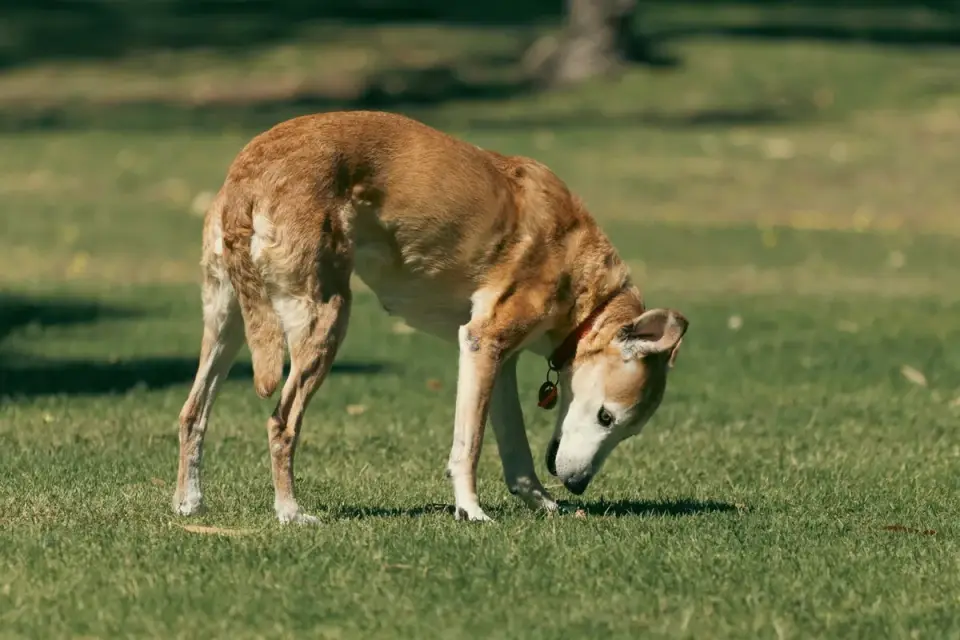
How does Qi and Blood thinking fit into a muscle plan without replacing the data?
In Chinese medicine, the Spleen is said to govern the muscles and the four limbs, and Spleen Qi deficiency is a classic pattern behind the kind of soft, gradual muscle wasting owners describe in their older dogs — the dog that still wants to walk but tires earlier, the hindquarters that feel less solid under your hand. I use that framing as a lens for where to look and what to ask, not as a diagnosis that stands in for bloodwork or an orthopedic exam.
A spaniel I saw for acupuncture support last year had exactly that pattern: normal appetite, stable weight, but visibly thinner over the topline and slower to rise from a lying position. The owner had already tried a joint chew with no change, because the problem was never really the joints. Building Qi and nourishing Blood, in that framework, means supporting appetite, digestion, and circulation so the body has both the fuel and the delivery system to use dietary protein well — the acupuncture and herbal side may help support that process, alongside the diet changes, not instead of them. It is a complementary way of organizing attention, and it never replaces a protein target or a vet-confirmed diagnosis.
When owners ask me to translate that into something concrete: watch appetite, watch stool quality, watch how quickly the dog tires, and treat those as signals to bring to your vet alongside any supplement conversation.
What should actually go in the cart?
Start with the diet, not the supplement aisle. Confirm the dog is getting enough high-quality protein, distributed across meals, before adding anything. From there, HMB is the ingredient I’d prioritize first among stand-alone muscle additions, given the (admittedly early) dog-specific data. Omega-3s and structured, low-impact exercise — short multiple walks over one long one, sit-to-stand reps, gentle incline work — do more for lean mass retention than most bottles on the shelf.
Check for the PetMD description of the NASC quality seal as a baseline filter for manufacturing and label honesty. It won’t tell you the formula rebuilds muscle, but it narrows the field to companies willing to be audited, which matters when you’re feeding something daily for months. For a deeper look at how NAD+ precursor ingredients compare when they show up in the same longevity-and-muscle chews, see Nicotinamide Riboside vs NMN for Dogs.
Otto’s owner and I settled on more protein at breakfast, a short incline walk added to his routine, and a wait-and-recheck on any chew until we saw whether the basics moved the needle. Three months later, his haunches had rounded back out. The supplement question can wait until the foundation is actually in place.
Frequently asked questions
Can a supplement alone reverse muscle loss in an older dog?
Not on its own. Every mechanism that plausibly slows muscle loss in dogs — adequate dietary protein, resistance-style movement, and ingredients like HMB studied in dogs — works alongside diet and activity, not in place of them.
Is HMB safe to try for a senior dog?
The published dog pilot data comes from a small, short-term crossover study in a specific muscle-wasting disease, not a general-population safety trial, so treat it as encouraging rather than conclusive and loop in your vet before starting.
Does the NASC seal mean a muscle supplement works?
No. It means the maker underwent third-party audits of manufacturing and label accuracy — a real quality signal, but not a stand-in for efficacy evidence.
Sources
- Cachexia and Sarcopenia: Emerging Syndromes of Importance in Dogs and Cats — Journal of Veterinary Internal Medicine
- Sarcopenia in Dogs and Cats — Purina Institute
- Beta-hydroxy-beta-methylbutyrate (HMB) improves daily activity and whole-body protein metabolism in Duchenne muscular dystrophy dogs: a pilot study — PubMed
- What Is NASC? (National Animal Supplement Council) — PetMD
- Quercetin Formulation and Feeding Behavior Study — Pharmaceuticals (MDPI)
- Embryonic ER50 Exposure Effects on Development and Adult Lifespan — Phytomedicine