What Does Normal Dog Poop Look Like? A Vet's Structure-and-Function Read
A food-first vet walks through the color, shape, and consistency markers that separate a normal dog bowel movement from one worth a call to your veterinarian.
A normal bowel movement is a chocolate-brown, log-shaped, moist-but-firm passage you can pick up in one motion — everything that drifts from that is information, not automatically an emergency.

On this page
The checklist I actually use
Before the explanations, here’s the version I’d hand an owner in an exam room:
- Color: a consistent chocolate brown, no black, no bright red, no gray or white.
- Shape: a log, ideally with a little segmentation, not a pile and not a puddle.
- Coating: dry to the touch on the outside, no thick mucus casing.
- Effort: passed without straining, without repeated squatting, without a yelp.
- Pattern: roughly the same frequency and volume day to day for that individual dog.
If all five hold, you’re looking at a dog whose gut is doing its job. If one item is off for a single bowel movement, that’s usually noise. If two or more are off, or one persists past 48 hours, that’s a pattern worth acting on.
Picture an early-morning parking lot, a leash going slack while an elderly dog finishes her business, and an owner crouched down asking whether a shade-darker stool is the start of something bad. Three days earlier she’d switched foods because a bag was on sale. The shape held. No straining, no mucus, and the color was a plausible response to a new protein source. Structure and function told the story faster than panic could. That’s the habit worth building: read the whole picture before reacting to one variable.
Color: what’s on the spectrum and what jumps a shade too far
Chocolate brown is the target, and it comes from normal bile pigment breakdown as stool moves through the colon. Diet can nudge that shade lighter or darker without meaning anything is wrong — a beet-heavy treat, a new kibble, a course of activated charcoal will all do it temporarily. What doesn’t belong on that spectrum is black and tarry, which suggests digested blood from higher in the gastrointestinal tract, a condition called melena. Bright red streaks or spots point to fresh blood lower in the tract, known as hematochezia. Gray, greasy stool can mean the pancreas isn’t contributing enough digestive enzyme, and white specks are usually parasite segments. None of those five belong in the wait-and-see column.
Consistency: reading the log, not just the hue
Color gets the attention, but consistency is the more honest read on gut function day to day. A firm, segmented log that holds together when you pick it up is the structural goal. As stool softens toward a pile shape, then further into a pudding texture, then into something closer to a puddle, that’s a moisture and motility problem building in real time, not a single bad meal. I lean on this scale more than color when deciding whether a diet change is working. It’s also why the Purina Institute treats fecal consistency, not color, as the primary marker for tracking colon health over time.
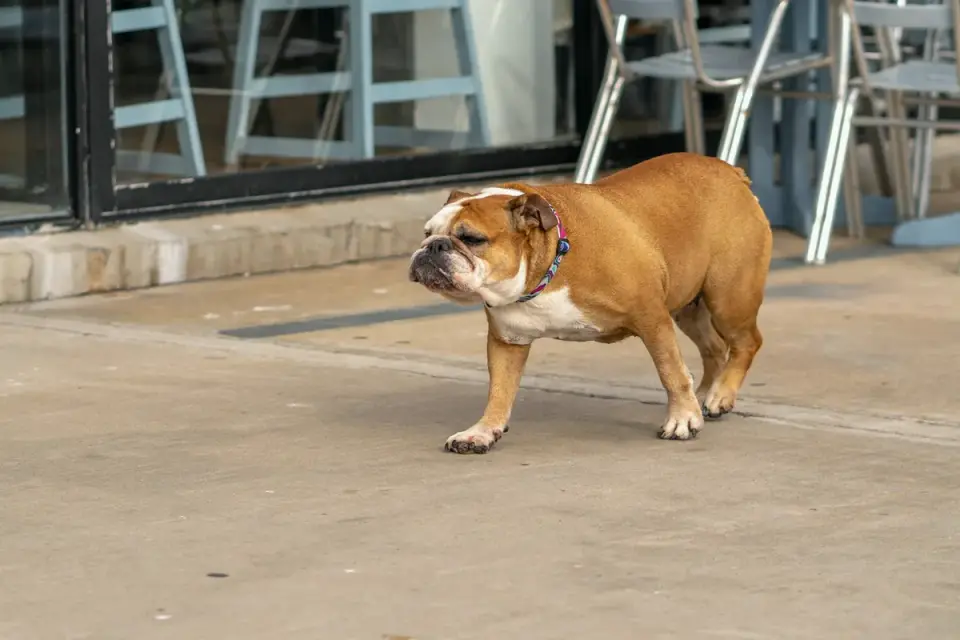
A second scene worth mentioning
A puppy gets into a plate of table scraps at a birthday party, and for four straight days the stool tells the whole arc: soft and formed on day one, visible mucus by day two, tightening back up on its own by day three once the scraps were out of the system, and normal by day four. Nothing about that arc needed a clinic visit — it needed patience and a return to the usual diet. The lesson isn’t that mucus never matters. A short, self-resolving deviation tied to an obvious cause behaves differently than an unexplained one that persists.
Frequency, straining, and the small stuff owners miss
Most healthy adult dogs pass stool one to three times a day, and what matters is stability for that individual, not hitting a universal number. Straining, repeated unproductive squatting, or a yelp during defecation point to pain, an obstruction, or an anal gland issue rather than a diet problem, and they deserve a same-week exam rather than a supplement swap. A gut microbiome working the way it should shows up downstream as steady, predictable output — which tracks with broader research showing that Frontiers in Veterinary Science found diversity metrics did not distinguish which dogs responded to a probiotic course from those that didn’t, underscoring how individual gut response can be. Digestive enzyme supplementation belongs in a narrower lane: it’s part of managing exocrine pancreatic insufficiency alongside diet and cobalamin, not a general-purpose fix for a soft stool, per the enzyme-replacement literature in JAVMA. If your dog’s case looks more specific than ordinary digestion, our guide to digestive enzymes breaks down when that supplement class is actually indicated.
When normal stops being normal
One odd stool is a data point. A pattern across two or three days — softening that doesn’t resolve, blood in any amount, straining, a sudden volume change, or a color from the do-not-ignore list — is a reason to call your vet rather than wait it out. For the broader picture of how diet, fiber, and gut flora interact to keep stool in that normal range day after day, our complete guide to dog gut health and digestion goes deeper than any single symptom can. And if the issue you’re actually chasing is smell rather than shape, that’s a different piece of anatomy and covered separately in our dog gas guide.
The bottom line
Owners get better at this fast once they stop grading stool on one axis. Color earns a glance; shape, coating, effort, and pattern earn the real decision. Build the habit of scanning all five, keep a rough mental log of what’s normal for your own dog, and you’ll catch the genuine outliers early — which is exactly when they’re easiest to manage.
Frequently asked questions
Is a little mucus on the stool always a problem?
A thin, clear coating now and then is usually not urgent, especially after a diet change. A thick, jelly-like mucus casing, especially paired with straining or repeat episodes, is worth a call to your vet rather than a wait-and-see.
Why did my dog's stool change color after I switched foods?
Pigment and fat content in a new diet can shift stool from tan to darker brown within a couple of days. It should settle into a consistent, chocolate-brown color once the transition is complete; if it doesn't, or if it turns black, red, or gray, that's a different conversation.
How many bowel movements a day count as normal?
There's a range, not a single number — most healthy adult dogs land somewhere between one and three a day depending on diet and activity. What matters more than the count is whether that count is stable for your particular dog.
Sources
- Exocrine pancreatic insufficiency in dogs and cats: enzyme replacement, diet, and dysbiosis — JAVMA
- Probiotic response and gut microbial diversity in dogs — Frontiers in Veterinary Science
- Diarrhea in Dogs: Acute & Chronic Care — Purina Institute
- Melena — Wikipedia
- Hematochezia — Wikipedia