Why Does My Dog Pant Heavily After Only a Short Walk Now?
A dog panting hard after a short walk can mean joint pain, a tired heart, or an airway that isn't keeping up. Here's how a vet sorts out which one.
A dog that pants heavily after a short walk is signaling change — the question is joints, lungs, or heart.

On this page
- The Fork: Chest First, or Joints First?
- What’s Actually Happening When a Short Walk Turns Into Heavy Panting
- Why I Start With the Musculoskeletal Exam
- The Strongest Case Against My Approach: When It’s the Heart
- Red Flags That Mean Tonight, Not Next Week
- What a Mobility-First Workup Actually Looks Like
- Where Supplements Fit — and Where They Don’t
- The Case That Sticks With Me
The Fork: Chest First, or Joints First?
When an owner tells me their dog is suddenly winded after a walk that used to be routine, I have two doors in front of me. Door one is the stethoscope: listen for a murmur, check gum color, worry about the heart and lungs first. Door two is the exam table: watch the dog walk, feel the hips and spine, ask whether the panting is really about oxygen or about pain. Most guides tell you to walk through both doors at once, which is technically correct and practically useless advice for an owner standing in their kitchen at 9 p.m. wondering if this is an emergency.
I don’t walk through both doors at once. I start with the musculoskeletal exam, and I want to explain why, where that approach can be wrong, and what should override it immediately.
What’s Actually Happening When a Short Walk Turns Into Heavy Panting
Panting is a dog’s radiator. It’s how they dump heat and, less obviously, how they compensate when something else in the body is working harder than it should. A dog that pants excessively after minimal exertion is usually telling you that one of three systems is asking for more than its baseline share of effort: the joints and spine, the airway and lungs, or the heart.
Orthopedic pain drives panting indirectly. A dog with a sore hip, sore stifle, or an aching lumbar spine doesn’t necessarily breathe harder because oxygen delivery is impaired — it pants because pain itself is a physiologic stressor, and because a shortened, guarded stride costs more energy per step than a normal one. According to Cornell University College of Veterinary Medicine, osteoarthritis in dogs shows up as pain, stiffness, a change in gait, reluctance to walk or exercise, and difficulty navigating stairs or getting up from lying down — a cluster of signs that, taken together, looks a lot like “gets tired fast” to an owner watching from the leash end.
Cardiac and respiratory causes work more directly. If the heart can’t move enough oxygenated blood per beat, or the airway can’t move enough air per breath, the dog runs out of reserve earlier in the walk and pants harder trying to make up the deficit.
Why I Start With the Musculoskeletal Exam
I’ve built a career, and honestly a clinical instinct, around starting at the joints and spine before I start at the chest. Here’s a case that shows why.
A nine-year-old Labrador named Otis came in because his owner said he’d started “huffing” halfway through their usual fifteen-minute loop around the block — a walk he’d done without complaint for six years. The owner had already assumed heart trouble and asked about a cardiology referral. What I noticed on the exam table wasn’t a murmur. It was a subtly shortened stride in the left hind, mild crepitus in that stifle, and a dog who sat down heavily rather than lowering himself with control. Otis wasn’t short of breath because his heart couldn’t keep up. He was panting because every step on that stifle hurt, and pain-guarded movement is expensive work. His owner had been managing the shortened walks for weeks, assuming it was “just age,” before the panting made it obvious something had changed.
That case is one dog, not a study, and I don’t treat it as proof of anything beyond what it is: a reminder that orthopedic pain is easy to miss because dogs are built to hide it.
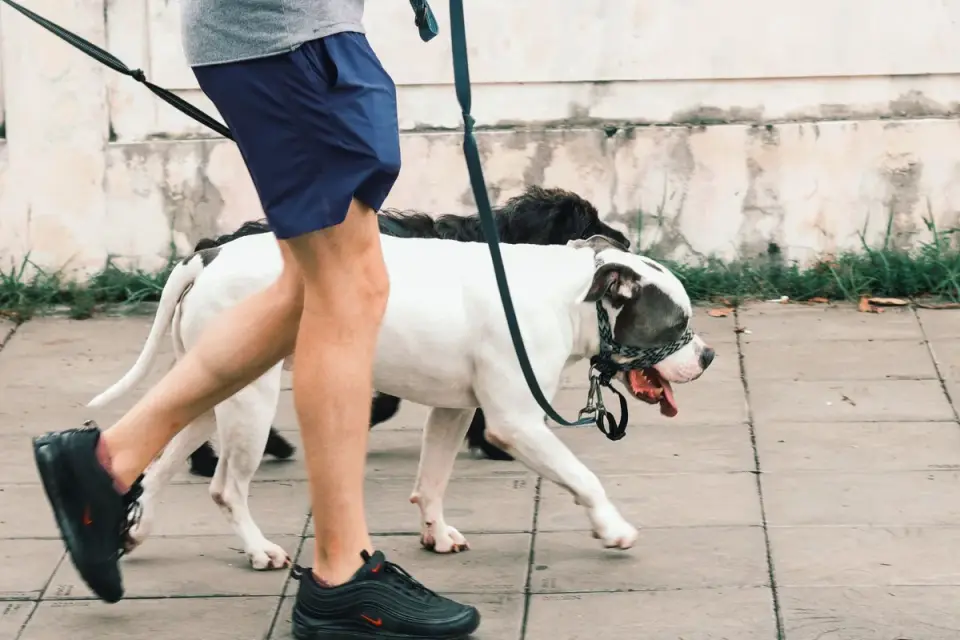
I still start on the exam table, feeling for asymmetric muscle mass, restricted joint range, and spinal pain, because in my practice that’s the piece most often skipped when an owner walks in already convinced it’s “just getting old” or already worried it’s the heart. Musculoskeletal disease is common, it’s underdiagnosed, and it’s treatable in ways that change a dog’s daily comfort. If a dog’s mobility problem is real and I’m managing it well, I’d rather find that first than run straight to cardiac diagnostics that may not be where the answer lives. If you’re already seeing hind-end weakness alongside the panting, it’s worth reading through what’s actually failing when a dog’s back legs are giving out before assuming it’s simple fatigue.
The Strongest Case Against My Approach: When It’s the Heart
I want to be direct about where my starting point can get a dog into trouble, because the honest counterargument matters more than the confident one. Heart disease is real, it’s common in aging dogs, and it is routinely mistaken for arthritis or normal aging — which is exactly the mistake my approach risks making if I’m not careful. According to the Cummings School of Veterinary Medicine, Tufts University, reduced exercise capacity is frequently misattributed to aging or arthritis when heart disease is the actual cause, and affected dogs often get short of breath early, want to cut the walk short, or need to stop and recover mid-walk. A dog that used to pull ahead on the leash and now walks beside you or lags behind is showing a pattern that heart disease produces directly.
That’s a genuinely strong objection to leading with the joints. So here’s where I still land: I do the orthopedic exam first, but I do it alongside — not instead of — a cardiac and respiratory screen on the same visit. Gum color, heart rate and rhythm, lung sounds, and a resting respiratory rate take two minutes. What changes is which findings I chase hardest afterward. If the chest exam is clean and the gait exam finds pain, I treat the orthopedic problem as the working diagnosis rather than ordering echocardiography by default. If the chest exam raises any flag at all, that overrides everything else immediately.
Red Flags That Mean Tonight, Not Next Week
Some signs should send you to a vet immediately rather than waiting to see if the panting settles down.
Pale or bluish gums, real difficulty breathing rather than just panting, collapse or near-collapse during or after exercise, a persistent cough, a visibly swollen abdomen, or panting that doesn’t ease within fifteen to twenty minutes of rest are not “watch and wait” signs. Those point toward the heart, lungs, or another acute problem, and they belong in an exam room the same day.
What a Mobility-First Workup Actually Looks Like
Assuming the chest exam is clean, a musculoskeletal workup for a dog panting after short walks usually includes a full gait assessment at a walk and a trot, palpation of every major joint and the spine, and an assessment of muscle symmetry — a thinner muscle mass on one hind limb compared with the other is often the clearest sign of a dog quietly favoring a painful leg for months. It’s a slower, more hands-on exam than a stethoscope pass, and it’s the part that gets rushed in a fifteen-minute appointment slot.
Owners sometimes ask whether the issue is neurologic rather than orthopedic, especially if the hind end looks weak or wobbly rather than simply stiff. That distinction matters for treatment, and it’s worth understanding how a neurologist tells joint pain from spinal disease before assuming either one on your own.
Where Supplements Fit — and Where They Don’t
I get asked constantly whether a joint or muscle supplement can fix a dog that’s suddenly winded on short walks. It can’t, and I say that plainly because owners deserve a straight answer before they spend money. A supplement doesn’t diagnose why a dog is panting, and it isn’t a substitute for finding out whether the driver is orthopedic pain, a failing heart valve, or a narrowed airway. Once a cause is identified and a treatment plan is in place, some supplements may help support joint comfort or muscle maintenance as part of a broader plan — but that’s a “may help support” claim, not a promise, and it comes after the diagnosis, not instead of one. If you’re weighing whether a muscle supplement belongs in that plan at all, it’s worth reading what the evidence actually says before you buy one.
The Case That Sticks With Me
I think about Otis more than I expected to when I first saw him. His owner had spent six weeks quietly shortening their walks, assuming it was age, before the panting got bad enough to book an appointment. By the time I saw him, he’d lost visible muscle on that hind limb from weeks of favoring it — a detail that told me almost as much as the exam itself. We started him on pain management and a structured, gradually rebuilt walking routine, and within a few weeks his owner reported he was initiating play again, something he’d quietly stopped doing months before anyone noticed. I didn’t run a cardiac workup on Otis because nothing in his chest exam pointed there, and I’d have been wrong to put him through it on a hunch. That’s the tradeoff I make on purpose: start where the evidence points, and let the exam — not the assumption — decide where to look next.
So when your own dog starts panting hard after a walk that never used to bother them, which door would you open first: the stethoscope, or the gait?
Frequently asked questions
Is it normal for a dog to pant hard after a short walk?
Occasional heavy panting from heat, excitement, or being out of shape can be normal, but a sudden change from a dog's usual pattern — panting hard after a walk that never used to bother them — is worth a veterinary exam rather than an assumption.
Could my dog's panting be arthritis instead of a heart problem?
Yes. Osteoarthritis can cause panting indirectly through pain and a guarded, more effortful gait, and it's commonly mistaken for both normal aging and for heart disease until a hands-on orthopedic exam sorts it out.
What symptoms mean I should see a vet immediately, not just monitor at home?
Pale or bluish gums, real breathing difficulty, collapse, a persistent cough, a swollen abdomen, or panting that doesn't settle within fifteen to twenty minutes of rest all warrant same-day veterinary attention.
Sources
- Osteoarthritis — Cornell University College of Veterinary Medicine
- Reduced Ability to Exercise — Cummings School of Veterinary Medicine, Tufts University